A while back, I posted some ramblings on the loss of language, after having become involved with a couple of Kickstarter projects: Tim Brookes's Endangered Alphabets, and Alissa Stern's effort to develop multimedia tools for teaching Balinese, an endangered language with an endangered script, to English speakers.
I'm happy to report that both projects were funded, and the Endangered Alphabets will be making an appearance in the Smithsonian in June.
The Balinese effort is also going strong, and Alissa has initiated a new campaign on Kickstarter designed to extend the software to include Balinese-Indonesian teaching materials.
As I bear witness daily to the loss of richness in English, and the loss of linguistic understanding in general among my students, I can't help but hope that somewhere, some languages will survive, with all their embedded culture and poetic possibility.
If you're looking for somewhere to invest a few bucks, this just might be the place; and certain levels are even tax-deductible. I just hope that someone won't have to do this for English at some point in the not-too-distant future.

Thursday, May 2, 2013

Saturday, April 20, 2013
Earth Day 2013: Small Steps

The first celebration I actually remember took place in Philadelphia in 1970, and I still have the poster I bought during those festivities. Today it happily adorns my kitchen wall and reminds me that in this little corner of the universe, every day is, in some way, Earth Day.
If I've learned anything over the years, it's that we can't really afford to lose our focus on what needs to be done, and I'm occasionally heartened by the fact that celebrants are no longer just cranky old folks like myself, but a include a much broader spectrum of citizens. I don't actually go out and march or dance in the street anymore, but I do spend time out on the property, taking inventory, and reflecting over the past year. This time, the view from the back yard toward the house is far more pleasant than it used to be, thanks to some major renovations last summer. New paint, a new bathroom and work on the old one (including new, very low-flow toilets), R50 cotton insulation in the attic, and solar screening will make the coming summer more livable. Plans for a geothermal heating and cooling system had to be abandoned because the cost would have made the rest impossible. But our energy bills are fairly low anyway, and we bought a portable air conditioner that works more efficiently than our old window unit. The attic fans have been repaired, which will double the air flow through the house, so our bills will probably be even lower, and our power use reduced even more.
Over the last few months, as I've talked with students and colleagues about what we've been doing with the house, I've realized that there are some fairly simple strategies involved with lightening one's impact on the planet that most people never really think about. None of them require much cash outlay, they do some significant good, and they confer a bit of peace and satisfaction upon their practitioners.
Shorter showers A couple of years ago a conversation on Orion's forum took this one on, and many writers saw it as purely symbolic. Real activism, they suggested, needed much more significant action. But think about it. If most people take daily ten- or twenty-minute showers, and then cut those in half, common sense (plus a bit of math) tells us that it all adds up. I'm talking water-savings here, in a drought-stricken region, rather than money, because monetary savings are small ($9/year or so). A four-person family can make a bigger dent if everyone's on board. Subtract the cost of a cute kitchen timer, and you're still saving water even if the timer costs a tenner.
Even better, take fewer showers. In her terrific 2010 book, Green Barbarians, Ellen Sandbeck (her blog is here) noted many ways in which our overly sanitized society wastes water and money on all manner of stuff designed to eradicate every possible germ (good or bad) and make us not smell like human beings. But we don't actually need to shower every day in order to be civilized or even healthy. It's thus quite possible to forgo a shower without contaminating the earth.
Rain Barrels We bought four (we had one) when we had new gutters installed last summer, and the only problem we foresee is keeping them from becoming mosquito breeding farms when they're over-filled after a rain. But BT mosquito dunks take care of that problem (as does a judicious lowering of the water level), and there's enough water in each one to take care of gardening needs quite easily. They won't help much with the lawn, but I'm also working on minimizing the amount of non-productive farmland. We do need romp space for the dogs, but over the next year or so I'll be replacing as much St. Augustine as I can with fruiting shrubs and low-maintenance ground covers. Since the non-productive area still provides ground-water recharge, I won't feel guilty if every square inch isn't edible. But many herbs make good ground covers anyway, and I can always give extras away to needy culinary students.
Compost Anything edible can be composted and turned into soil and/or fertilizer. For about a hundred bucks last year I snagged two bins for making Bokashi compost--a Japanese technique that essentially ferments your food waste, including protein sources like bits of meat and cheese. The ongoing investment in the probiotic granules needed in the process is the only expense after the bins. I bought two, and rotate them. When one is "done" it sits for a couple of weeks, and the contents then buried in the garden. If, like us, you've vastly reduced your food waste, the process can be rather leisurely. It might take a month or more to fill up a bin (even when spent flowers and other non-food plant materials are added). In the meantime, you also drain off liquid that can be diluted with water to use as a liquid fertilizer. The areas in the garden where the first two batches were buried are now lushly verdant. Some stuff still ends up in the big compost bins (weeds, mostly), and most of our coffee grounds are used on the roses, but we end up with about four Bokashi "crops" a year. We're also considering a method called hugelkultur, which involves burying our brush pile and covering it with the excavated dirt to form raised beds. This would solve the problem of having to use the chipper-shredder (the only gas-powered yard appliance we own). We get a large amount of brush from the trees on the property (rain + wind = downed limbs), and seldom have the time or energy to deal with it. Some gets used for firewood, but the rest is just sitting there. Being a brush-pile.
Note: This week's explosion in West reminds us all too painfully of the price we pay for depending on chemical fertilizers. This world really needs to find ways to feed its population without relying on toxic and potentially disastrous combinations of chemicals.
Growth Even folks who don't have large sunny spaces suitable for food crops can grow herbs. Many herbs are perennials, and also flower, so they can take the place of ornamental annuals. I now have a large, expanding crop of Greek oregano growing in the front border, and have started taking bits of it to plant in obscure corners of the property. I'm also thinking very seriously of planting the parkway with peppermint, which is otherwise pretty invasive and has to be grown in isolation or in pots. But a few strategically placed mint transplants next to the street will look better than the weeds that grow there now, and will smell nice when dogs walk on them, and when their owners clean up after their poopy pooches.
The abundance of shade from our 18 trees (not counting the ones growing along the back alley, which have been planted by birds and squirrels and left to flourish by us, since they mask the houses behind us and offer some considerable privacy) means that our veg-growing success is mixed. I'm hopeful about the tomatoes, peppers, and tomatillos I have planted, and will try beans and radishes as well. Now that we have some sunny space in the side yard (which was fenced by a cranky new neighbor last summer), I may try something there--especially since that's where one of the Bokashi batches was buried, and where the next one will be as well.
Anything green we grow lowers our carbon footprint, and if we're smart it will also lower our food bills without contributing to Big Agriculture. People with kids can accomplish even more, because growing things provides all manner of lesson-material and connects children with the planet in ways they'll never forget. As I'm fond of mentioning, all the talk about the financial deficit we're leaving them ignores the environmental mess they're inheriting if we don't radically alter our habits, soon. Financial deficits and surpluses are ephemeral; they can be eradicated as fast as they're incurred or accumulated. Environmental deficits, on the other hand, can take millions of years to correct. And that's if we get started today.
Image note: The photo was taken a couple of years ago in what was once called "the accidental garden" in the southwest corner of our half-acre property. It later turned into our own personal carbon sink, after years of purposeful neglect turned it semi-wild. It will regain some of its garden-ness when we reclaim some of it as cropland after attempting to establish a hugelkultur patch this summer.
Tuesday, February 26, 2013
Food, Culture, and Common Sense
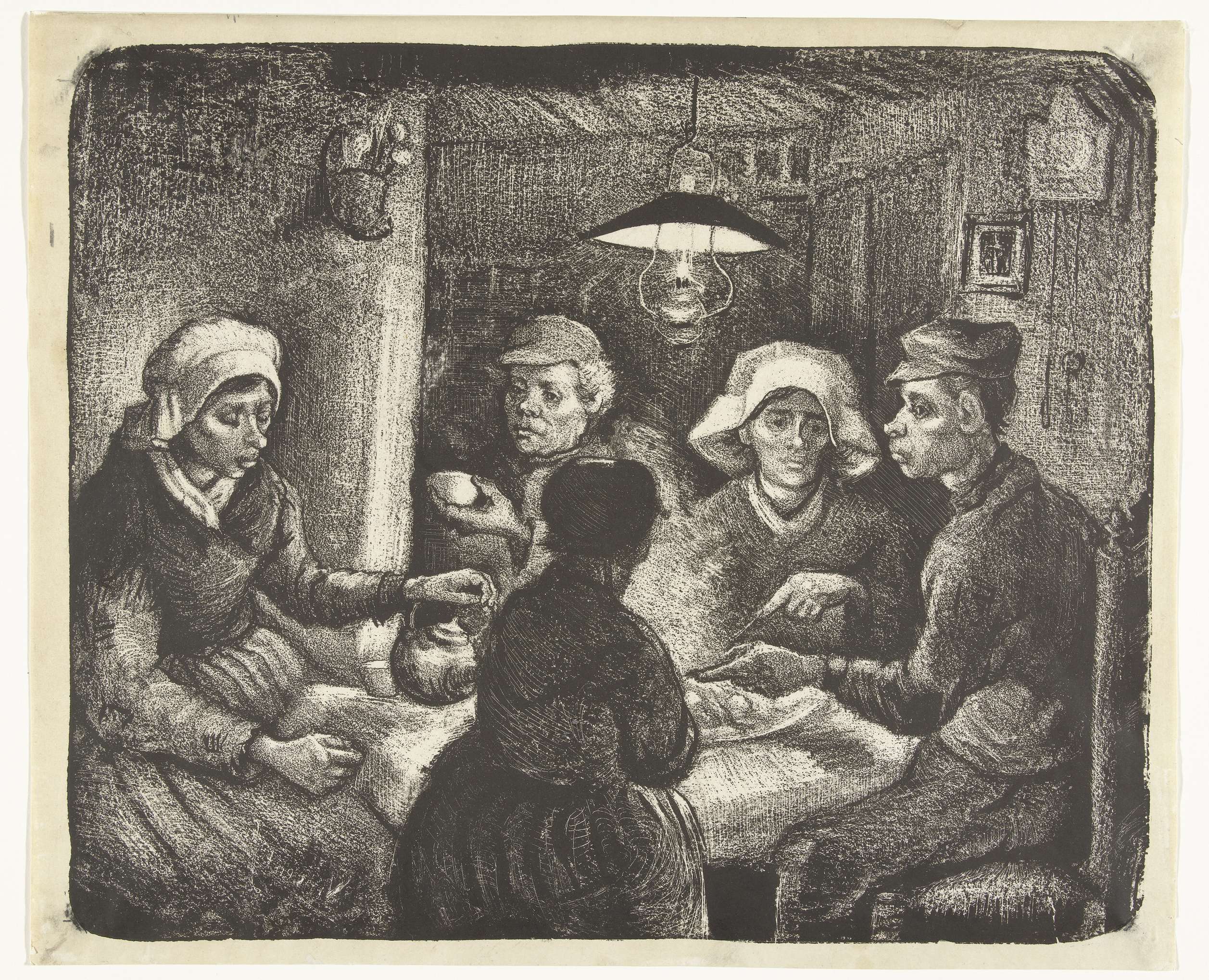
The latent Scotswoman in me keeps popping up, with David Hume whispering in one ear, and Thomas Reid in the other. Those of you who haven't downed enough Scottish Enlightenment philosophy along with your Macallen or Lagavulin won't know what I'm talking about, but I took a memorable course with Victor Worsfold many long summers ago and what I learned then is creeping back into my consciousness now. The empiricist argues with the pragmatist. Almost daily.
"Common sense" today refers to a kind of received knowledge tempered by reason, as in a "common-sense approach to government" or "for crying out loud, use your common sense." Trouble is, there doesn't seem to be much sense among the common folk these days, and what might seem to be evidence of actual common sense appears to come as a surprise to many.
Take diet. Real common sense would suggest that if a large population of people suffers significantly less heart disease than another, perhaps we should compare lifeways: diet, activity, occupation, etc. You may remember that several years ago, the "Mediterranean diet" hit the news, and the foodie faddists went at it energetically. I certainly didn't need much encouragement (fully one half of my 300-odd cookbook collection already included books on Spanish, Italian, Greek, French, Israeli, Turkish, Egyptian, and North African cuisines; the rest are about culinary history, much of which involves the ancient Mediterranean), and quickly added The Mediterranean Diet, The Slow Mediterranean Diet, A Mediterranean Feast, and The Essential Mediterranean to the shelves.
Of course, diet is only part of the equation. People in Crete, whose food-traditions go back to the Minoans, ate lots of fruits, veg, unprocessed meat (chicken, lamb), fish and seafood--the usual culprits. What often got left out of the discussion, however, was that these same people toiled on their farms from dawn to dusk, drank Retsina, and didn't sit around on their duffs playing video games all day. Nor did they keep a supply of Twinkies stashed in the root cellar (where they kept their root crops, dried fruits, etc. for use during the not-terribly-cold winter).
So, when the newspapers fill up with articles on Startling Discoveries, such as connections between general bad health and highly processed foods, or the "surprising" (to whom, exactly?) results of the recent Mediterranean Diet study, or that type 2 diabetes afflicts more, younger people every year, or that gluten intolerance is rising precipitously, or that sitting on one's duff playing video games is bad for us, I just get the vapors and reach for a glass of Zinfandel.
Are we, collectively, so flaming stupid that we can't see the equation: 16 oz. Slurpee = potential diabetes? Highly processed foods with four different kinds of sugars, two days' worth of sodium, and multiple unpronounceable "ingredients" (none of which is actual food) = potential heart disease? Foods so far removed from their natural state as to be unrecognizable = rare diseases becoming far more common? Hormones in our meat, hormone-disrupters in our air fresheners = premature puberty in children?
One then wonders about the very notion of common sense, because it seems to be so, well, un-common. I can't, however, help but assign at least part of the blame to Big Agriculture, Big Pharma, relentless advertising on behalf of food processing conglomerates (Big Everything Else). Big Food is a huge part of the American economy, and we're spreading the "wealth" everywhere else (witness the Big Mac effect in China)--including the Mediterranean region (if that's not irony, I want to know what is). I used to think that folks in other countries were just smarter, or at least more practical than we are, but now, not so much.
The trouble is, at least in part, that in the modern world, an abundance of meat, fat, sugars, and other once-rarer commodities are all emblems of wealth. Another moment of high irony: cucina povera, essentially Italian peasant cooking (literally "cooking of the poor") is hot stuff in foodie world. Popularized by Mario Batali, who's a food conglomerate unto his own self (if you're a fan like I am, read his cookbooks; don't visit his website), it's nevertheless an admirable approach to food. One cooks well what one has, as most poor people in the increasingly distant past once did. This is another example of real common sense at work--what we used to be good at. I've recently been making an effort, tied to reducing food waste, to finish up what's in the fridge, using staples from the pantry. This often involves making what I call "Leftover Soup," an amalgam of whatever leftover meat and/or veg are available, with broth, onions, and anything else that seems fitting. Sometimes I add pasta or rice if it needs body, but essentially dinner is what's there, cooked up with some herbs and flavors that make it appetizing. Of course, this frequently leads to irreproducible results, but unpredictability has its own charms.
One of the real problems in America is that bad food tends to be cheaper than good food, and urban food deserts (with little access to supermarkets with fresh produce) are nonetheless seldom without a corner fast food joint.
Anyway, the world's quest for questionable evidence of wealth may be killing it. I once wrote about redefining what it means to be poor, because a significant amount of what we now see as "poverty" is really just a lack of the trappings of modernity. Having electricity, which might, indeed, raise some very poor people out of abject squalor, isn't consequence-free. Producing electricity without polluting the environment irreparably is a continuing problem. Cheap electricity breeds waste, because if the energy source is inexpensive, people pay less attention to need than to desire. More access to stuff inevitably generates more waste. (The links are to previous posts on these topics.)
I'll undoubtedly return to this subject in future, but I've probably vented enough for today. I would like to note, however, that all this advice we're getting through various media, as results from various tests and studies roll in, amounts to a plea for moderation and--yes--common sense. It makes so much more sense to eat what we love, and if it's not terribly good for us, limit it rather than exclude it. If what we love, however, is Twinkies and Doritos, it's time to re-educate our desire. What's good for us can taste really good, and it's not all that hard to cook like a poor person. All you really need is a few basic ingredients, a pot, a spoon, and a heat source.
And a good bottle of olive oil. And a decent bottle of wine.
Image credit: This is a lithograph of Vincent van Gogh's The Potato Eaters, courtesy of Wikimedia Commons. For the painted version, see the Google Art Project page. Although not one of his most popular works, the subject is appropriate to the topic of this post: peasants eating food they dug from the ground. It captures many of the artist's different influences: genre painting, realism, post-Impressionism, and even hints at his expressionism.
Subscribe to:
Posts (Atom)