Saturday, July 11, 2020

Occasional Small, Beautiful Things

Texas is one of the states in which the Plague is increasing its toll, so we've had to focus inward, to the spaces on our half acre that harbor lives floral and faunal. We've been out to vote (early, in a runoff) and the Beloved Spouse to gather supplies for some work on the property, but life is pretty much lived here, within the property line.

Every morning Molly starts mewling to be taken out to the back yard for her early perambulation, so I usually take the opportunity to inventory phenological signs of summer's progression, and to address pressing issues. Like wilting basil. I've also been doing a fifteen-minute Qigong practice most mornings, and sometimes another during the evening sojourn before suppertime. But it really is nice to move through the Eight Brocades or the eighteen forms of Shibashi out under the trees--especially if there's a bit of breeze.

Molly at her "pond"

 At any rate, by the time I've finished, Molly has usually decided that it's time to go in for "cookies"  (the announcement of which usually brings her out from under the shrubbery where she's been watching me), and happily follows or precedes me into the house for her promised bit of freeze-dried salmon. Now that she's settled into this pattern I can relax and not worry about her trying to escape, and she often follows me around as I check to see how many figs are ripe (only one so far, and it was luscious, right off the tree), how many new varieties of fungus have sprung up, what plants may be budding or blooming.

Occasionally we'll discover the aftermath of predatory violence, like yesterday when we found the feathers of a small, newly fledged mockingbird scattered about. Barred owls, sharp-shinned hawks, and other large raptors frequent the property, and although I admire them immensely, I'm ambivalent about their presence after the demise of Molly's predecessor, Emma.

Emma is not the only animal missing these days. There are exactly two pair of fireflies evident in our back yard. And I've only seen one bat this year. I imagine that the only reason we've got any fireflies at all is because we don't use any chemicals anywhere, and only BT bits in water dishes and bird baths (to keep the mozzie population down). But it's hard not to suspect that dire happenings are afoot. A heat dome is settling on most of the US over the next couple of weeks, drying things up while holding in the humidity, evaporating what's left of the recent rains from out of the soil. Cracks are appearing in the bits of the yard not covered by the recent mulch distribution. I haven't yet watered anything but the fig tree and the lone tomato plant with a little old-fashioned two-hole sprinkler. Everything else gets doused with water from a jug or a hand-held spray attachment. Humanity is dealing with its pandemic, but we seem to have inflicted apocalypse on the rest of the natural world.

Still, not everything seems quite lost--yet. Occasionally I encounter small, beautiful things that renew my natural optimism. Now that the local Carolina Wrens have hatched and raised their first crop of babies, they seem to be nesting again. It got quite noisy out back while the last birdlets were being weaned, but now it's quiet again. Just yesterday, I noticed that a wren had been nosing around a little bird house on our front porch, and I peeped in one of the two "apartments" to see three tiny eggs. A little while later I went back to take another look, and this time disturbed the mom, who flittered out--but was back soon after I left. So I put a couple of rocks into a metal bowl of water to give her a spot nearby to drink, and have been staying away from the nest.

 
After she's dealt with this batch, I'll move the box up to the top of a porch pedestal to lessen the chance of predator attack, and so I'll have a clearer view from inside the screened porch. Unexpected events like these come about infrequently, but they do provide a bit of cheer in increasingly dreary times.

As the numbers of Covid-stricken humans go up in Texas I keep hoping that the cost of running around "free" from restrictions will finally become apparent to the deniers. But watching the health care workers pleading for sanity on nightly newscasts is heart-breaking and doesn't do much to raise my regard for the willfully ignorant.

So much of what's happening is evidence of a massive, complex, problem that involves ignorance and anthropocentricity on a scale that might not be remediable. What our species has been doing to the natural world is a big part of what got us into this pickle and when I think of the future that awaits the children of former students and my own children's friends' kids, there doesn't seem to be much room for hope. If the world manages to pull through this latest test of our collective wisdom and ingenuity, we'll have earned another chance. But in this particular socio-political moment, the if seems awfully tenuous.

Right now, my focus on the future involves seeing whether or not those baby wrens hatch.

Sunday, June 28, 2020

Life on the Delta

No, I haven't moved to New Orleans, or to the mouth of any river that flows into a sea, or even to an alluvial fan--like the ones that characterize the foothills of the Eastern Sierra.

This delta is, instead, symbolic. Back when I was still a scientist wannabe, I took myriad geology and astronomy courses, and used common note-taking shorthand symbols that included ☉ (the sun), ⊕ (the earth), and a Greek letter delta (Δ) for change. 

This is the delta I'm referring to in the title of this post.  Technically, I suppose, it's used in maths as a symbol for difference, but I just subbed it for the word "change" whenever I was describing the phenomenon of change (usually over time). So no it wasn't used particularly correctly (although my fellow students commonly did the same), and no it doesn't have anything to do with the Christian notion of trinity. The symbol has quite a range of uses and the Wikipedia article covers them in its usual quick and easy fashion, so you can fact-check me if you like. 

But I've been thinking rather a lot lately about change (and difference), as many of us probably have over the last four months or so. We on the Farm are still pretty much locked down, going out only to places that offer geezer hours or that provide curbside pickup. We use Amazon more than we ought to, but try to take advantage of free delivery to order stuff we can't easily get without shopping around. Just this week I ordered oven liners (after trying in vain to keep spills off the floor of my oven), a three-pack of Anti Monkey-Butt Powder (we're doing a lot of outdoor-work in the increasingly hot and humid now-summer in north Texas), and a two-pack of Lady Grey tea not carried by the grocery sources we use. I can also get freeze-dried minnows in six-packs, which makes my cat very happy, and Cutter unscented insect repellent cans by the dozen. My current anti-coagulant regimen includes both warfarin and generic Plavix, the combination of which makes me exceedingly attractive to the local mosquitoes, and an easy mark.

The biggest commercial change in our lives, though, is the now-regular use of a local farmers' co-op, which I'm sure I've mentioned before, and the probability that this will be an ongoing practice. I'm hoping that in the larger picture, this may become an alternative to the old Big Ag food distribution system (the one that includes mammoth farms and enormous meat-packing facilities, along with feed-lot cattle ranches and dairies).  Most of our groceries now come from local farmers (eggs, meat, cheese, produce, fruit, bread, and even some goodies like marinade and salad dressing). They keep adding items to the list through the order-period, and I'm trying something new almost every week. The stuff is delivered to a cooler we leave on the front porch, with notifications of when it's going to arrive (within 30 minutes) and after it's been delivered. 

This model of food distribution seems ripe for widespread adoption. Several online companies have been offering meal kits and meat assortments for some time, but this particular arrangement was developed in response to area restaurant closings as a way for farmers to stay in business and get their products to customers in lockdown. 

The most significant cultural change is, of course, the reaction to the cruel deaths of George Floyd and others, which have collectively ramped up the Black Lives Matter movement and may well have finally effected real change--or at least the promise of it. The large-scale reform of police departments that seemed probable thirty years ago, may finally come to pass. I have long preached to my classes about the fallacy of the idea of race, although I have embarrassingly few black friends (actually, I don't have many white ones either), and haven't marched for equal rights in forty years. But I do vote, and will probably go to the polls in person in November. The Beloved Spouse is under 65, so he can't vote by mail in Texas, so we will vote together, early, and properly attired, in the runoff next week, and will do so again on Election Day, unless the Texas legislature wises up and allows ballots by mail.  

I used to carefully examine each candidate's qualifications and positions and vote accordingly. I can't imagine not voting for a Democrat or a person of color this time, however, for any reason. My days of giving Republicans a fair viewing are over for the time being. None of the ones running even vaguely resemble the people I used to vote for, back when being a conservative (little c) didn't mean being a religious or racial bigot, or a science denier. It will take a different administration to keep the positive changes in motion.

And then there's the climate. We didn't have a winter this last year, and spring was simply more of what we'd had since last fall--except that we couldn't get out and enjoy the milder weather. The good fortune that allowed us our little respite down in Palmetto State Park seems like a lifetime ago. Porco Rosso (our trailer) sits all shiny and clean and ready to travel, all dressed up with nowhere to go.

The stormy season is getting longer, and May and June brought us intermittent week-long thunderstorms. We had the Preservation Tree folks come up and take care of dead branches and dangerous limbs overhanging the house and our power lines. They opened up the canopy nicely and the difference is apparent even in casual photos like these (taken about three weeks apart).


The operation left us with a pile of useful hardwood mulch, which doesn't look like much here, but The Beloved Spouse and I have been at it for over a week, moving a few dumper-wagons full per day to the back, spreading it over the muddy bits in the back quarter-acre, filling in planting beds, and dressing up bare spots (under the picnic table and around the seating area where no one can gather any more in these troubled times).


One of the advantages to anarchic gardening is the gift of occasional wonders, such as this clump of rain lilies. Like the wild gladioli I've featured elsewhere (and which were reduced significantly by some varmint or other last fall), these appeared unplanned and unannounced  several years ago, but they do not bloom predictably. The torrents of rain we got this year, however, made them bloom in abundance; the photos were taken nearly three weeks apart. This time I salvaged some seeds, and will plant them in front, in hopes of propagating them.


And so, for us, life goes on. There's no sign that things are getting or will get better, even though where we live has been little affected by the Plague itself. In-office doctor visits have returned, but about the only place mask-wearers don't get any grief around here is in health care facilities. We even bought cute Porco Rosso and Totoro masks from Redbubble in hopes that they'd publicly affirm our commitment to safety. But Texas is being really stupid about opening up (there were four garage sales on our street last weekend, with nobody wearing masks and certainly not staying two meters apart), so we can only do what we can and be really careful ourselves.

I can only hope that real change comes about sooner rather than later: that people stop being stupid about the virus, start listening to smart people (doctors, nurses, scientists, and responsible adults); that people begin to realize (again by listening to smart people who know about these things) that race is an artificial social construct initiated millennia ago by people seeking power, but that has no scientific basis; and that we learn to temper our desires for unnecessary commodities with restraint and wisdom so that we don't destroy the planet before today's grandchildren get a chance to enjoy what it has to offer its stewards.

That's for the next post, though. The newest round of thunderstorms has arrived, and I should probably get off the computer.

Saturday, May 2, 2020

Not With A Bang

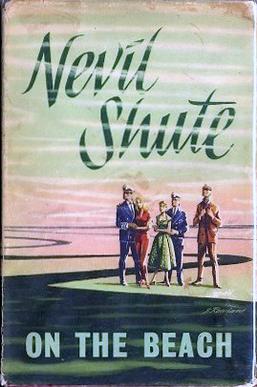
This is not the first time in my life when the tone for the Zeitgeist was set by Nevil Shute's novel, On The Beach.

There were moments in the '60s and '70s (think Cuban Missile Crisis and Peak Oil) when the final scenes of the novel (spoiler alert: everybody dies) drifted in and unsettled my consciousness. Even though the book's disaster involved nuclear radiation (rather than pestilence), my having spent a few formative years in Japan not long after the end of the second world war (and having visited what little remained of Hiroshima at the tender age of seven) managed to paint all forms of doom with a single brush.

So I wasn't surprised when, as the new virus grew into a pandemic, I remembered that palpable sense of foreboding--not dissimilar to the air raid-like sirens used to call the Eloi to Morlock dinner-time in the 1960 film version of The Time Machine. I still get creeped out every first Saturday of the month at noon, when the local tornado sirens get tested and remind me of our weekly air-raid drills on my dad's base in Japan.
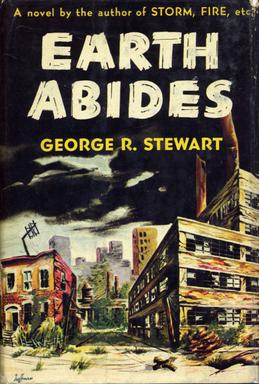
But a lot of bad news has emerged since the seventies, and since I read a great deal of speculative fiction, other literary metaphor-mines have made their ways into my library. The usual suspects come to mind: Walter Miller's A Canticle for Leibowitz, Pat Frank's Alas, Babylon, Margaret Atwood's Maddaddam books (as well as A Handmaid's Tale), Octavia Butler's Parable and Xenogenesis series--to note only a few. Some are more optimistic than others, but all deal with some aspect of post-apocalyptic angst. Much more recently, although written much earlier, I came upon George Stewart's Earth Abides, which I picked up at a used bookshop and squirreled away on my Utopia/Dystopia shelves (yes, plural). I started reading it about a decade ago, but--because I was still teaching--got distracted by grading or some such time sucker and put it back on the shelf.

About that same time, I bought Alan Weisman's compelling description of what the earth would come to look like if human beings simply vanished, The World Without Us.  But I only got about a hundred pages into that before it landed on the "Crap We're Doing to the Planet" shelves (again, plural; I have a whole bookcase on the topic). I used to have an app (for my old iPhone Silverback), but it's long gone. There is, however, a short video that shows what would happen to your house in about a hundred years. In the end, we might deserve this if we keep ignoring the other inhabitants of the planet, but (as Weisman himself puts it in the preface to his book), "Since we're imagining, why not also dream of a way for nature to prosper that doesn't depend on our demise?" I should point out here that I've left out the whole category of zombie-punk, which I find totally devoid of philosophical import and therefore not worth my time. Nor do I read stuff on AI-focused alternatives because I'm pretty sure that stuff's not going to happen. Viruses and nuclear holocaust are scarier because they're so much more possible--and likely.

The coincidence of the new Plague and the release of the Michael Moore/Jeff Gibbs  documentary, Planet of the Humans (you can add Planet of the Apes to the above list, but I only saw the one film and never read the book) sent me on a recovery hunt, and I added both Earth Abides and The World Without Us to the "to read" pile next to my living-room comfy chair.

George Stewart's prescience is almost spooky. Although his book unfolds in the wake of a pandemic that kills off a substantial portion of the human population, and the story follows the protagonist's geographical wanderings in the aftermath, the narrative is interposed with descriptions of what actually happens as infrastructure breaks down and non-human life begins to take over the landscape,  which is what Weisman's book does in much more detail.

This is obviously a pretty depressing exercise, and I try to intersperse my readings with work on revising More News From Nowhere (which is essentially an optimistic view of the future--but only for a few thousand folks who manage to slip out a back door) and reading about other possibilities. For example, the Earth Day issue of Nautilus includes Kevin Berger's thoughtful essay, "The Ecological Vision That Will Save Us" (subtitled "To avoid the next pandemic, we need a reckoning with out place in nature"). Someone suggested that I ought to read Steven Pinker as well, because he's generally more optimistic about the future of capitalism, but I can't get past his position that nukes are necessary to prevent the collapse of civilization as we know it. If I'm going to acquire a view more rosy than the one I hold at the moment, somebody's going to have to sell the public at large on slower growth, fewer people, and a whole lot less stuff. In the end, I'm a closet barbarian, and am not all that happy with civilization as we know it. Contemplating Armageddon is less depressing when your gene pool has already been depleted (we will have no grandchildren), and you're already into your threescore years and ten. And if you stay home.

At any rate, I'm certainly not bored or so depressed I can't bring myself to do anything moderately creative. Our household has managed to do what shopping we need thanks to the care the people at Trader Joe's and Costco are taking to protect old folk, and have been ordering goodies (like pastured pork, free-range eggs, great bread, good veg--although so far only baby turnips and baby carrots--from the farm co-op that delivers to our area, Profound Foods). The focus in the news on meat processing plants and the very large problem they present to the economy as a whole, and especially to the people who work for them under horrific conditions, has completely divorced TBS and me from the US industrial meat complex. If we can't buy humanely raised animals locally, we just won't eat meat. Period. If anyone reading this finds my position problematic, I invite them to read Upton Sinclair's The Jungle (1906). I read it in the '80s for my master's thesis on American literary naturalism, before the expansion of the meat-packing industry to present levels, and it turns out that things haven't changed much since Sinclair exposed what the industry was doing at the turn of the twentieth century.

In some ways, Michael Moore has been a modern-day muckraker in the Sinclair mold; what he and his fellow troublemakers have done this time is to put so-called green energy producers under a microscope and call some of them out for some serious hypocrisy. But his footage and information about solar technology is out of date and inaccurate (according to this house's resident solar aficionado, The Beloved Spouse, who spends as much time researching ways to get us off the grid as I do grousing about modernity on my various outlets). Moore's not great on providing solutions, either, but there are good conversations going on about how things can change. These (like Kevin Berger's Nautilus article) tackle different aspects of the problem(s), and I do harbor some hope that things can get better, that we can become better humans, and can find sustainable solutions to the problems we've helped create.

What we cannot forget, though, as states like Texas begin to "open up" and try to re-establish some semblance of normality, is that so very many people have died, and many more will die. Over a million people in this country have already contracted some level of the virus--and the number keeps climbing. The heartbreaking stories I watch or read every day about people who've died helping the sick makes me want to shake the idiots who go out and endanger others' lives because they've got cabin fever and want to get their hair colored or their nails done. I'm not talking about those who are forced to work in meat-packing plants that are forced to stay open (because they're "vital to the health of the economy;" although it's pretty clear that a vegetarian diet is probably better for us than what most folks consume). But those who think that their inconvenience is more important than the lives of health care professionals and first responders and their families don't present a good argument for maintaining our species in its present configuration.

On December 22, 1947, the day after I was born, William Meredith Stanley, who had won the Nobel Prize in Chemistry in 1946, wrote the following in Chemical and Engineering News. It was used as the epigram for the first chapter of Earth Abides, "World Without End."
If a killing type of virus strain should suddenly arise by mutation . . . it could, because of the rapid transportation in which we indulge nowadays, be carried to the far corners of the earth and cause the deaths of millions of people.
The pandemic George Stewart described in 1949 was far more virulent than we all hope the COVID-19 virus will turn out to be. But one has to emphasize the notion of hope. I don't think I'm simply being pessimistic when I find the views of epidemiologists and other scientists more compelling than the views of the current administration in Washington D.C. The prospect of at least one treatment is encouraging, but the reality of the vaccine-development process is much less so. In the absence of well-coordinated, science-based, nation-wide planning, all most of us can do is sit back and wait. I just hope the experience doesn't end up like it did for those folks in Melbourne at the end of On The Beach.

Note: I had trouble coming up with a title for this screed, but the final lines of T. S. Eliot's "The Hollow Men" ("This is the way the world ends . . . not with a bang but a whimper") were featured on the title page of the first edition of On The Beach, and kept coming to mind.

Human beings make a lot of noise. The relative quiet we all experienced, especially at the beginning of the lockdowns when motor traffic came to an almost literal halt, is what originally reminded me of the final pages of On The Beach. The quiet in Stewart's novel is so omnipresent that it becomes almost a character. Of course this is most likely not the end of the world, but the sense of doom that pervaded the early weeks of the pandemic still hasn't completely subsided. Especially among the families of those who are dead or dying, the sick, the unemployed, the inmates of nursing homes and prisons, and others still suffering around the world--while scoffers in Florida go out to the beach to party.