Showing posts with label architecture. Show all posts

Tuesday, September 26, 2023

Into Autumn

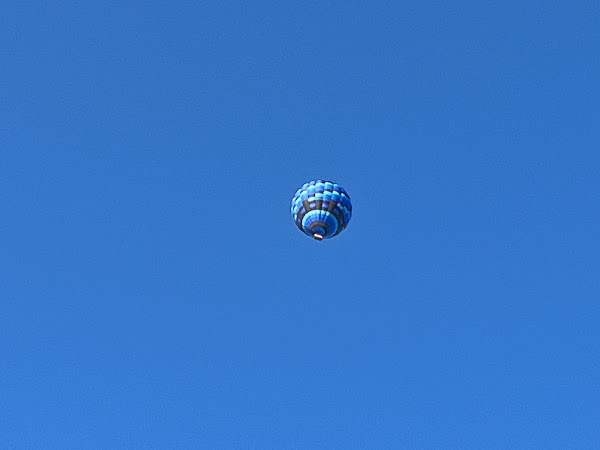
First Overhead Balloon of the Season
Another season turning: better weather, a bit of rain, lingering hot days (but cooler nights). It's a few days past the equinox, a few days short of the full Harvest moon, and I'm getting ready for eye surgery which will put me out of commission for a week or so, but should preserve the sight in my left eye.  In preparation, I've been taking it easy, pottering about the garden, and trying to ignore the news. Molly has taken to spending time with me on the backyard table when I go out to drink my morning tea, so I get a dose of companionship and cuteness before the mozzies figure out that I haven't bathed in repellant. 

Sunday in the Garden with Molly

Nylah is usually over behind the garage, keeping watch for errant dogs or babies who might stroll by. Although basically quite intelligent, her Great Pyrenees genes tend to keep her in "big dumb mop"* mode, more ornamental than useful. She is pretty to watch, but seldom photogenic enough to capture. The last photo I took was in June:

Nylah Lounging in Woody's Garden

In terms of holidays, the Celts celebrated the transition from summer to fall at the equinox, and through to Samhain (which marks the midpoint between the autumnal equinox and the winter solstice, and coincides with Halloween)--when cattle were brought down from summer pastures. I'm wondering just how long it will take the current weather patterns to complete the change, given all of the climatic upheavals we seem to be "enjoying." 

One of the seasonal markers that occur fairly regularly here in the northern part of Occupied Mexico is the Plano Balloon Festival, which takes place about ten miles south of here, near where we lived while my kids were growing up. This year it coincided with the equinox (September 21-24), and the opening photo for this post (taken on September 18) probably represents someone practicing before the event. I'm not sure how much ballooning actually got done because of high winds and other kinds of threatening weather, but we haven't attended the event since The Beloved Spouse began tennis coaching, because by then the whole thing had become a circus and the team got wrangled into participating. 

Celebrations of all kinds seem to have run amok in the last few decades, in part because they've become huge cash cows for businesses. The market-capitalism greed machine has overtaken the communitarian aspect of seasonal goings on, and now they all appear to run together, and the hype begins earlier and earlier each year. 

A couple of days ago, while I was looking through old posts for a family recipe, I revisited the first year of this blog. The November 27th, 2007 entry (entitled "Enough") ruminated on greed--so it's clear that things haven't improved much. 

Nevertheless, I keep finding small indications that some shifts might be taking place. An article in the New York Times on young Luddites (from December of 2022) suggests that technology may not have quite the grip that some of us fear, at least among Gen Z. These kids actually remind me a bit of a group of rather pretentious intellectuals from the local boys' Catholic high school and the public school I attended. We all got grounded around graduation time because we stayed out all night at one guy's house reading T. S. Eliot, discussing The Little Prince, and listening to a couple of them playing Chopin etudes--and there weren't even flip phones for us to call home with.

An article in this week's New Yorker, Sam Knight's "A Young Architect's Designs for the Climate Apocalypse"  quoted from an essay by architect Anthony Dunne in the journal, Reading Design: "A Larger Reality," wherein he quotes from Ursula K. Le Guin's acceptance speech for the National Book Foundation Medal for Distinguished Contribution to American Letters in 2014, where she enjoined science fiction and fantasy, and other "writers of the imagination" to challenge the profiteers of the written word who dictate what should be written and rewarded:

Hard times are coming, when we’ll be wanting the voices of writers who can see alternatives to how we live now, can see through our fear-stricken society and its obsessive technologies to other ways of being, and even imagine real grounds for hope. We’ll need writers who can remember freedom — poets, visionaries — realists of a larger reality. (Copyright © 2014 Ursula K. Le Guin)

With this in mind, I'd like to recommend two small books that provide us with a glimpse of a possible future that avoids Armageddon and turns away from climate apocalypse: Becky Chambers's A Psalm for the Wild-Built and A Prayer for the Crown-Shy (Macmillan 2021 and 2022). For a nice essay that shows why I might be recommending these books, see Molly Templeton's "The Refreshing Hopefulness of Becky Chambers' Monk and Robot Books."

See you on the other side. Or, as Capt. Mal Reynolds would say, "Y'all gonna be here when I wake up?"**


*Not an entirely coincidental reference, because I just finished my second reading of A Prayer for the Crown-Shy last night, I found this passage describing Sibling Dex's family dogs to be a particularly appropriate description of Nylah's lineage and demeanor: "There were three of them, all shaggy herders painted in soft swirls of brown and black, smart as hell when they were at work and big dumb mops every other hour of the day" (113). It's also appropriate that the photo of Nylah I included was taken in the little garden dedicated to one of her two predecessors, Woody--of Woody and Arlo fame. Both were border collie mixes, of which breed Nylah is about half, all of these three also big dumb mops when they're not busy being herders.

**False alarm. My retina surgery has been postponed. But thanks for any concern.


Saturday, July 29, 2017

Fake History


Seventeen years ago, when we were looking for a house of our own to buy, we were attracted to this town and this neighborhood by the fact that ordinances prevented buyers from tearing down little old bungalows to build big, new, characterless monstrosities. Both house-hunters and builders had recently discovered east Dallas, and prices had begun to rise precipitously just when we were entering the market. So our cute little neighborhood in “Lakewood Borders” as I called it (officially “Lakewood Heights,” on the fringes of the posh and pricey neighborhood surrounding White Rock Lake) was almost immediately out of our range—and almost as quickly began to change character in the absence of any kind of historic designation. When The Beloved Spouse decided one day to drive up to McKinney and look around, he found The House almost at once, and within months it was ours.

It wasn’t perfect, with its AstroTurf on the front porch and gold shag carpet in most of the living areas, but the “bones” were most certainly solid, especially for a house built only a year after my father was born (1922). The neighborhood itself was a mixed bag of little scruffy bungalows (like ours) and large elaborate Tudor and Georgian revivals, along with Texas Victorians both large and small. The wooden bits of our house had been clad with white aluminum siding that hid some of its Craftsman details, which probably contributed to its affordability, and it would be years before we accumulated the wherewithal to begin to restore it. 

In the meantime, we stripped the floors of the carpet and managed to get up most of the goop that had held it down, and over the next ten years we refinished bits and painted other bits. The lovely quarter-sawn planks that had been hidden under the gold shag have been stripped but are still unfinished; we’ll get it done eventually. Most of our effort has been spent tearing down badly thrown-up sheetrock and ancient stained and worn wallpaper to expose the ship-lap underneath. Before it was trendy to do so, we removed sagging beaverboard ceilings and left the wood open to god and everybody, and later painted some of the walls and stained and sealed others.  What we have not done is to “update” the kitchen and downstairs bath, opting instead to keep as much of them intact as possible, even if they’re not quite period-correct. We’ve bucked the trend to enlarge the kitchen, replace the tile, put in stainless steel and granite and replace cupboards, even though the kitchen’s rather tiny and the bathroom is neither appropriate to the ’twenties nor particularly stylish.  Nonetheless, visitors seem to like the place, proclaiming it comfortable and homey. It seems to remind folks of their grandparents’ houses.

When we finally mustered the funds to get the siding removed, we painstakingly researched historically appropriate colors to paint the new hardie board sections (sturdier and less expensive than wood, and much more authentic-looking than the aluminum stuff). We chose four: a barn red for the major fields, "Dard Hunter Green" for the larger segments of trim, "Roycroft Adobe" and "Roycroft Rose" for smaller bits of accent. These all came from the Sherman Williams Craftsman palette, and were chosen to match the multiple shades of red and green on the brick. The comments were immediately favorable, with neighbors stopping buy to tell us how good they thought it all looked.

Unlike many bungalow-owners, we gave no desire to turn our home into a museum of the Craftsman style, in part because we could never afford to. Most of what our place is furnished with is old and well loved, but not period specific. So while I admire and respect the aesthetic sensibilities of Morris and his heirs, what decorates our home is useful and beautiful to us, but is unlikely to fit the criteria of the more religious of the American Bungalow faithful.

I’m not quite sure why it is that so many people rely so heavily on shelter magazines and home improvement/house-hunting television shows to determine how their interiors should look.  It’s as if they need permission to do something adventurous or out-of-the-ordinary, and so wait until they see someone do it in a magazine before they take a chance. And as much as I love my house porn, by far my most beloved of magazines is the British edition of Country Living. I no longer get it in print because I haven’t the room to hoard any more back issues, but the many I already have stashed (and my more recent digital subscription) reflect something intriguing. Even though I have issues dating back to the ‘80s, none of them seem out of date today. Open any issue and the rooms seem just as fresh and current as they did then.  Perhaps this stems from the fact that Brits don’t seem to need anyone’s permission to relish their history and traditional country life. But in the US, our history is so recent and such a hodgepodge of influences that we have very little in the way of deeply held aesthetic traditions. Some pockets of “native” design exist (the Southwestern adobe houses in Arizona and New Mexico, the Spanish Mission influence in California, for example), but these reflect the traditions and tastes of early inhabitants or conquerors rather than anything deeply American (whatever that would look like).

The recent housing boom has hit this town like a tornado, however, and the small bungalow interiors that make houses like ours so cozy will be disappearing even more quickly than they already had been. Buyers can’t do much to the exteriors because restrictions regarding architectural style are in place for older houses (sound structures can’t be torn down, but can be added to—considerably—and must retain one of the approved vernacular vocabularies), but they can gut interiors to match the modern, "open plan," country-ish interior they saw on Houzz. In addition, our city council seems to be rather lenient with new homes on vacant lots. The preferred new construction these days is a sort of Faux Texas Farmhouse Modern Rustic, clearly inspired by what’s been going on down in Waco for the past three years or so. I’m not quite sure what to think of all this, because it’s not true to the spirit of the town’s traditional structures, but it’s a damned sight better than the Middle American Texas Tudor Ranch Baroque crap that’s always being built on the other side of McKinney, outside of the historic district.

Anyone who spends as much time as I do fantasizing about land and old houses on Zillow will notice  the decline of the genuine old house interior. Even when people buy one of the standard two- or three-bedroom bungalows built in the twenties and thirties, and even though they can’t really change the exterior of the house significantly (except to put up fake shutters, usually in totally inappropriate sizes), they immediately start knocking down interior walls to “open up the space,” covering all horizontal surfaces in kitchens and baths with granite or marble, and jamming in the largest stainless steel fridge and range that will fit. They also tear out perfectly good tile and cover the vertical surfaces with too-narrow “subway” tile or some other hot choice-of-the-moment. Then they paint the walls and woodwork white.  And although a few on-the-market houses have adopted the  “Fixer-Upper” nouveau-rustic aesthetic so popular on HGTV now have chucked the sheetrock and tile for ship-lap and bead boarding—they then paint that white.

Since I’ve gotten a bit cute with my bathroom (topping the four-inch yellow tile with a frieze of varied hand-painted Mexican tile framed with some of the ship-lap salvaged from a beyond-rescue ceiling), I can’t comfortably wear the mantle of true historicity. But at least what we’ve done is to jazz up the old, staid, American Standard bathroom without tearing the whole thing down or enlarging it to hold a Roman bath complex. I’d be practically ecstatic if that’s what more people decided to do around here: look to their southwestern neighbors for inspiration that doesn’t come from a single source, or, better yet, delve into their own families’ backgrounds for ideas that evoke history and memory.


But the demand for houses in this area is exploding, and the asking prices are rising astronomically, and people seem to be “investing” now in “updated” kitchens and baths so they can get top dollar when they sell out. Which is what they’re really doing—although one can hardly blame them, since already ridiculous property taxes will only rise in respond to the boom. 

Oddly enough, this new fever has dampened our own ardor a little, and we're feeling less inclined to move away. We had already begun to seriously consider sheltering in place, rather than selling out and running west to the high desert. And now, with houses like ours being marketed with asking prices nearly twice what they should be, our anti-exploitative convictions are taking over and we’re much more reluctant to go through the angst of sorting through books and the clearing out that it would take to be able to move. It’s probably more evidence of nostalgia on our part, but we’d feel as if we’d abandoned this well-loved house if we sold it just to make a buck. Or several hundred thousand bucks.

We came here because this is one of several towns in Texas that has maintained ties with its history. Many north Texas towns like McKinney and Waxahachie have taken steps to preserve older neighborhoods, and even Dallas has tried to stem the growth of McMansions and the destruction of its older bits by using historical designations as a means of turning back the tides of rampant “progress.” But if the nod to history is only superficial, we’re really not going to be much better than the old western facade movie sets. The small rooms that made bungalows cozy are giving way to “open plan” entertainment spaces that reflect lives at odds with what old-fashioned family values seem to require: intimate dining spaces, rooms for quiet reading, conversations around the hearth. Our house suits us much better than a much bigger one would—but then we’re empty-nesters on the verge of full retirement, without grandchildren or all that much family nearby.

I guess I just wish that before folks start telling their builders to tear down walls and put in the trendiest new accoutrements (and don't get me started on "distressed" furniture and phony "aged" paint jobs), perhaps they could spend a little time looking through an issue of American Bungalow or the British edition of Country Living for ideas about how to mesh the new with the old, in order not to remove the patina of history from houses that still have stories to tell.  Instead of watching "Fixer Upper," check out "Rehab Addict" for ideas about how to do less damage to a house’s original character. And if they want a new house, build a new house. Don’t try to turn an old, weathered, seasoned dowager into something that will never quite fit comfortably into heavy makeup and trendy fashions. 

Tuesday, June 26, 2012

Engaging the Inertial Dampeners

I have come to the conclusion that inertia is the strongest force in the universe--at least, in my universe.  Once I start doing something, my tendency is to keep doing it until acted upon by a countering force. To wit: once I got into the habit of writing on a frequent basis, and I kept on at it, somehow finding the time to get an essay or two or three a week posted on this or another blog.

Sometime in the last year or so, however, the forward flow was slowly counteracted by forces that seemed to be beyond my control.  My students are, for example, becoming more and more academically needy from lack of appropriate training, and much more difficult to engage.  I'm probably getting grumpier and more boring from lack of interest in the more time-consuming aspects of social media (still no Facebook, although I did sign up for Google Plus, visited infrequently) and even less interest in most popular culture.  I cannot, for example, even begin to understand the zombie thing.

The result of the change in inertial direction has meant fewer and fewer blog posts.  This is probably not a bad thing, because even I got tired of hearing myself grouse all the time about the sorry state of the galaxy.  Nevertheless, the Beloved Spouse and I have recently managed to get off our saggy duffs and begin something we've been needing to do since we bought our little house on the Texas prairie: renovate our sadly neglected bungalow.  It's about rutting time, since the poor thing turns 90 this year.  We kept thinking we'd do it ourselves, but never did.  And now I know why.

Mind you, we were spurred into action by a series of unfortunate events (what I now think of as an example of an inertial dampener--or, as some Trek buffs like to say, "damper").  Designed to keep spacegoers from slamming into the walls when a ship drops out of warp, these nifty devices compensate for the inertia that speeds the Enterprise and the rest of the Fleet through space.   In our more earth-bound sense, it refers to the proverbial kick in the arse that gets things moving.

The Kelmscott-Manor lookalike next door recently sold (finally, after well over a year on the market for about a half a million; I think it fetched around 400K) to a lady with cocker spaniels who clearly didn't want our mangy little bungalow to mar her privacy or her view.  So she put up a six-and-a-half foot wooden privacy fence that runs from the back of both properties to about where our front porch begins.  Suddenly, instead of the lovely twin gables and rose garden, we were faced with the ass-end of a fence, metal support posts included. 

On the plus side, we don't have to look at the bad concrete-step replacement with its adjacent concrete lions (the BS and I belong to neither the Cult of the Concrete Animals or the Cult of the Bronze Children, both of which seem to be rapidly gaining adherents in town).  It also cuts down the air flow and toasts our side yard in the afternoon. 

Instead of bitching and wingeing, however, we squeezed the lemons out, added limoncello and ice, and got the same fence company to build us a craftsman style four-foot spaced picket fence with a pergola and gate, and we're getting rid of the old wire fence that demarcated the back yard; the puppies are going to be ecstatic because they'll be able to get much closer to the terrifying babies and strollers and neighborhood dogs that Woody and Arlo are jointly convinced are out to get us.

The fence, in the end, was what finally got us serious about the renovations.  Thanks to a very nice re-do across the street, we found a contractor without the help of Angie's List (from which I'm going to resign shortly; we apparently don't like the same things that everybody else likes), and his crew is already at work prepping the house for painting, re-roofing, re-siding, re-glazing on the exterior.

Before I close out this rather long-winded account, I'd like to mention the sweet man who drove by the house a few weeks ago, with the improbable (but appropriate) name of Charlie Angel.  He had  been driving by occasionally, hoping someone would be out so he could stop and ask about the house he'd been born in--not brought to at birth, but born in!  He'd lived here as a child until his parents built another bungalow a few blocks away, but he had a child's happy memories of the place, which apparently hasn't changed all that much.  After a tour of the house (which was embarrassingly messy, but he didn't seem to see the dust and clutter) he left, a happy man, and we promised to have him back after the renovation is finished.

It's funny how this encounter reinforced my very conservative approach to restoring historical spaces.  The house may well end up looking even more like it did when Charlie was a little boy. For one thing, no granite is going in. Anywhere.  We're not even putting in air conditioning (that's a later project, because what we are doing has already taken up the budget).  Most of what's happening is conservation rather than renovation, with the idea of making the place more livable in case we get stuck in Texas for the rest of our lives.  The Beloved Spouse had already taken the summer off from teaching, and has begun the onerous task of clearing out the garage, carting stuff to the tip, arranging for "big trash" pick-up, and financing for the repairs.  So even though my tiny little holiday (two weeks) began on Monday, he'll be able to supervise the work over the summer and all I have to do post commentary on the progress of our new inertial direction.

Image notes: the photo is one I took this week, with the house in mid-prep (the construction debris trailer can be seen at left). The shot was taken with the Nikon D80.

Saturday, March 12, 2011

Geology Lessons

The enormous, near-apocalyptic temblor off the coast of Honshu would have been surprisingly tame, had it not been for the tsunami. The main reason for the comparative lack of architectural damage from the earthquake itself has to do with lessons the Japanese had learned well from history.

The great Tokyo earthquake of 1923 nearly flattened the city, with a notable exception to the general devastation: Frank Lloyd Wright's Imperial Hotel. It stood intact, surrounded by the debris of neighboring structures.

Since 1995's Great Hanshin earthquake in Kobe, the Japanese have implemented building codes and disaster plans designed to mitigate the inevitable destruction associated with the different kinds of earthquakes to which Japan is subject. The Kobe quake took place near a large population center, under the island itself, rather than offshore, so it didn't have to cope with a tsunami. Still, it wasn't as prepared as it could have been, and the human and economic impact was immense.

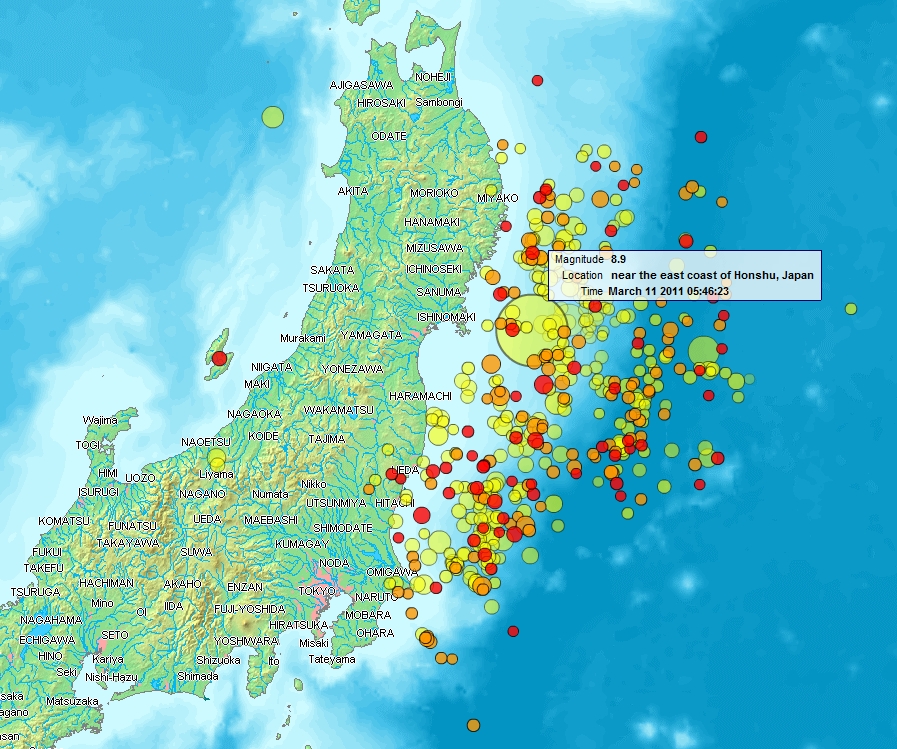
This week's quake was different, and the map below indicates why. It occurred along a subduction zone in relatively shallow water, not far from the coast: a recipe for large-scale tsunami impact. The numerous aftershocks haven't helped. I counted over 30 of magnitude 6 or higher on my iPad earthquake app--so many, in fact, that the big one had already dropped off the list. The pushpins on the map formed a huge, solid blob because the graphics weren't designed to depict hundreds of earthquakes. The map below is clearer, and if you click on it and then enlarge it, you can really see the enormity of an event that really hasn't stopped yet.

Having lived in four major earthquake zones (Japan, Taiwan, the Owens River Valley, and southern California), I'm no stranger to the earthquake experience. Even when small ones occur in unlikely places (such as Pennsylvania and Dallas), I sense them early and seem like a prophet to those around me (or a complete nut; take your pick). My interest in geology may, in fact, have stemmed from wondering about what caused it all.

But the aftermaths are also indicative of how human beings respond to disasters when they live in areas prone to them. There are few places on the planet that aren't subject to some dangerous phenomenon or other. Here in North Texas, we're on the lower fringe of Tornado Alley (which seems to be widening as the climate changes), and always teetering on the brink of drought. Hurricanes, floods, katabatic winds, wildfires, avalanches, and all manner of catastrophic events occur in places that might be safe from earthquakes, volcanoes, and tsunamis--although many are located within areas with a wide variety of potential natural disasters to withstand.

How we live when faced with these consequences is where clear-thinking and lessons from history should prevail when making choices. Sometimes what seems to be a good idea at the time turns out to be problematic, as with Japan's increasing reliance on nuclear power. In order to reduce its dependence on oil, the country has chosen to bet on nukes. Now, to me this sounds absolutely crackers, given the location of the island: at the edge of a plate boundary subject to ten centimeters of movement in a year. Sure enough, the Guardian is reporting today that the Japanese nuclear industry has barely dodged a bullet at the Fukushima Daiichi nuclear reactor, and avoided a meltdown. At least for the time being.

In 1872, what may have been California's worst earthquake in recorded history (around the same magnitude as the one in San Francisco in 1906) occurred along the fault line over which I was born. The valley's population then only numbered about 300, and twenty seven of them died. They're buried in a monument just outside of town. The land slipped down on the eastern segment of the fault, all the way up to Big Pine. On one of my last trips there before my father died, he pointed out the spot on the family's old property where a spring opened up as a result of the quake. (I love the lurid headlines at left; a sign of things to come in the Murdock era of tabloid journalism.)

The adobe structure in the center crumbled, leaving only its roof.

The frame house survived intact, losing only the flimsy shed attached.

The lesson from this rather small-scale local event (when compared, at least, with what Japan is going through today) was that adobe houses don't withstand earthquakes; only the frame houses survived. From then on, frame-built buildings took the place of adobe, which might be fine for fault-free Arizona and New Mexico, but clearly not the material of choice here.

On the other hand, the frame houses in Japan have never done well, probably because the quakes are different, the earthquakes bigger, the populations larger. But the effort to earthquake-proof buildings in Japan is focused on tall structures in business districts. Japan's real success has been in disaster-proofing its citizens, with drills and signs to direct them away from danger when possible. We can probably thank these measures for keeping the death toll down, even though it will probably keep climbing for a while.

I can't help but think that we'll never get it right if we don't stop pretending that our huge footprint on the planet doesn't make disasters worse. If we didn't rely so heavily on oil refineries, nuclear plants, and giant skyscrapers, and if we were spread about more wisely, might we not prevent much of the unnecessary suffering that attends our choices to live where danger is part of the landscape? If we didn't have huge energy grids susceptable to shutdowns due to weather or attack, wouldn't our energy needs be met more efficiently, without the potential for massive impact? If we weren't so very in love with using internal combustion engines to move us around unnecessarily long distances at ridiculous speeds, couldn't we vastly reduce the amount of dirty crap we spew into the air that, in turn, seems to be intensifying natural disasters?

Thinking smaller seems to make much more sense today than ever: more local food and energy sources, fewer commuter miles, more responsive local economies. I don't think for a minute that we'll ever decide to address any of these issues in any meaningful way, but when the latest disaster news takes over the wires, I can't help but long for a more thoughtful populace, and wiser political leadership.

Image credits: An old postcard view of the Imperial Hotel opens the post; it and the photo of the earthquake aftermath are from Wikimedia Commons. The map of what's now being called the Sendai Earthquake also comes from Wikimedia Commons. The shots of damage from the Lone Pine earthquake come from Susan Hough's report report on the event, "Owens Valley: Then and Now" on the USGS Pasadena pages.